About the Socioeconomic Subcommittee
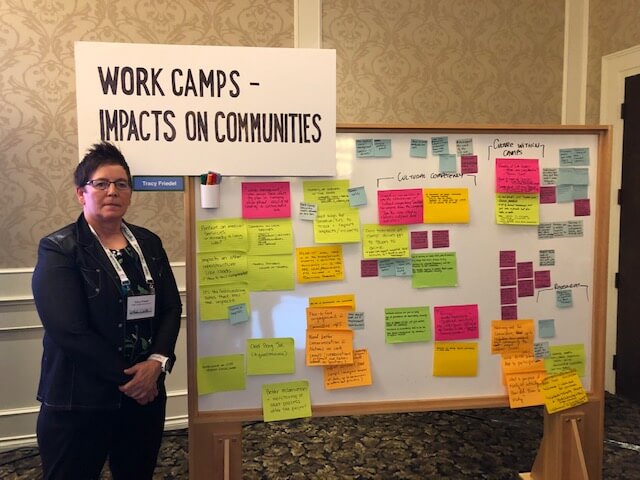
The Socioeconomic Subcommittee (SESC) focuses on addressing complex impacts for Indigenous peoples from natural resource development. This includes areas such as business and employment opportunities, skills training, and temporary work camps and influx of workers.
The SESC is guided by the following strategic objectives:
- Supporting strength building for Indigenous communities by identifying and monitoring socioeconomic effects of natural resource development.
- Collaborating with regulators, legislators, and federal partners to improve regulations and practices for working with Indigenous peoples on identifying, predicting, mitigating, monitoring, follow up, and managing socioeconomic effects.
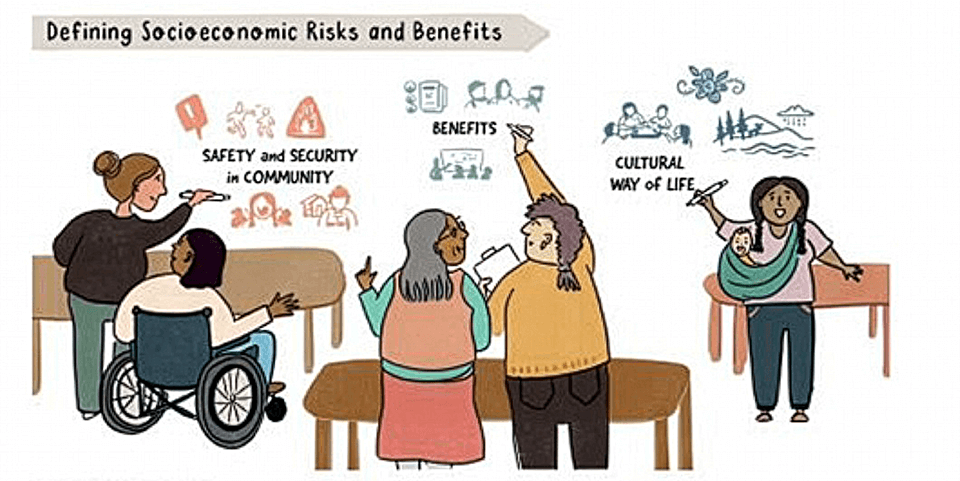
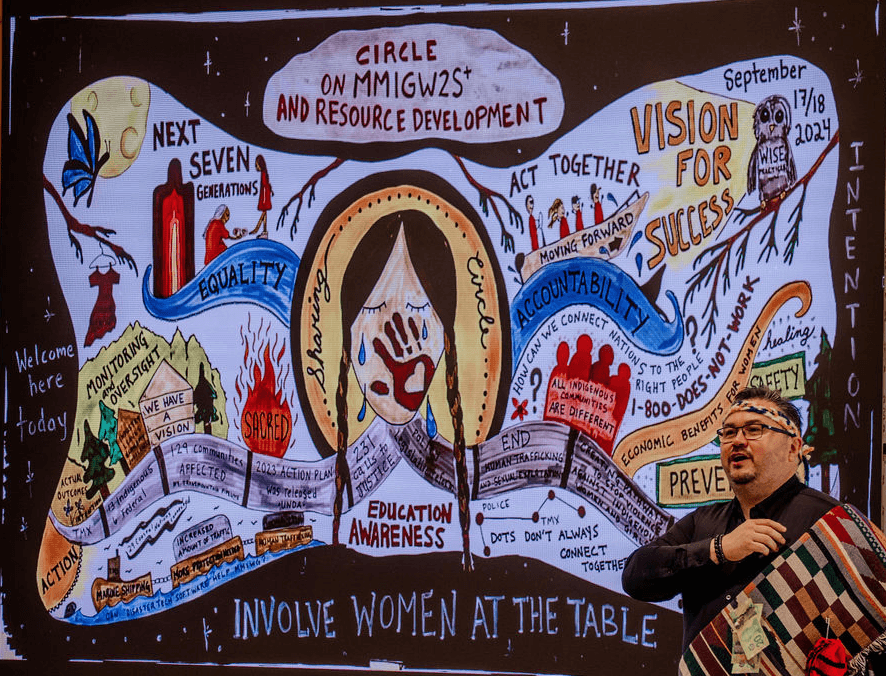
- Addressing the safety and security of Indigenous women, girls, and 2SLGBTQQIA+ people and improving their capacity to benefit from major resource development projects.
Contact the SESC
For more information about the SESC, please contact Tracy Friedel at tracy@iamc.ca.
Our Vision
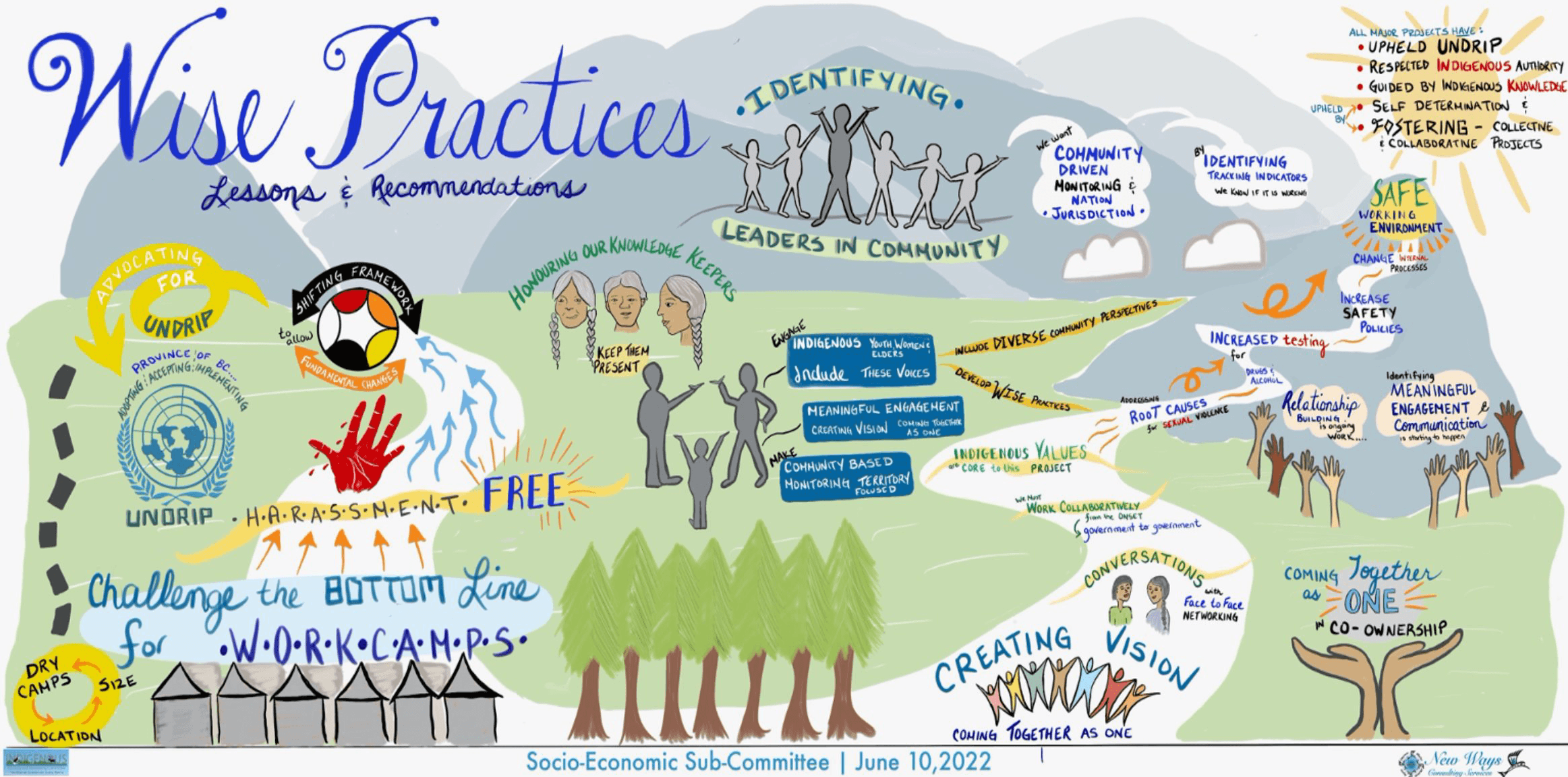
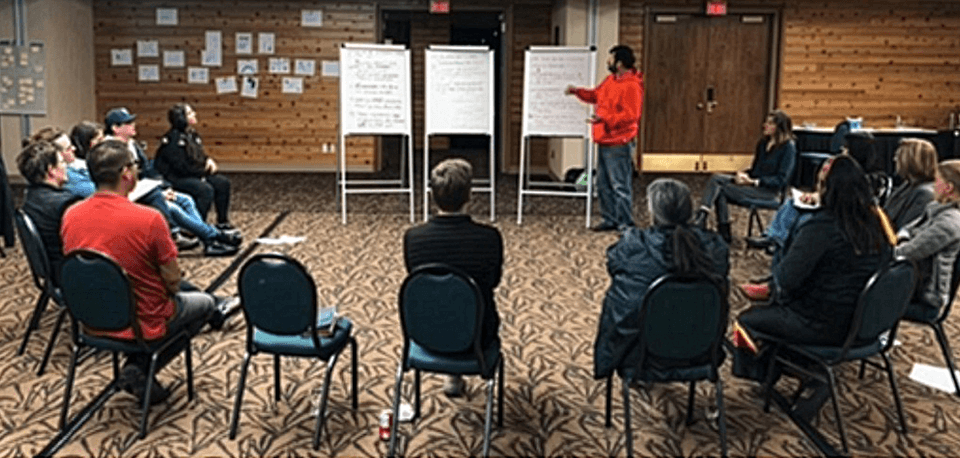
In 2022, SESC members gathered in Banff and engaged in a collective visioning exercise where the following living vision statement emerged:
We know we are successful when all major projects have upheld UNDRIP, respect Indigenous authority, and are guided by Indigenous Knowledge and decision-making. Projects approved with Indigenous authority uphold self-determination of Indigenous nations, communities and rights-holders while fostering collective and collaborative relationships.
In our vision, non-Indigenous systems will implement UNDRIP with accountable, consistent staffing, funding, and relationships. Non-Indigenous people, systems, and processes need to challenge Settler-colonialism, implement UNDRIP, and to centre Indigenous perspectives while transitioning and balancing power dynamics.
When these conditions are met, then major projects are designed, led, and managed in a manner that supports strong, healthy communities, and build on community strengths, with actions such as revenue sharing agreements, ongoing strength and relationship building, training and collective addressing of harm experienced by Indigenous communities.