The SESC focuses on addressing complex impacts for Indigenous peoples from natural resource development. This includes areas such as business and employment opportunities, skills training, and temporary work camps and influx of workers.
The SESC is guided by the following strategic objectives:
- Supporting strength building for Indigenous communities by identifying and monitoring socioeconomic effects of natural resource development.
- Collaborating with regulators, legislators, and federal partners to improve regulations and practices for working with Indigenous peoples on identifying, predicting, mitigating, monitoring, follow up, and managing socioeconomic effects.
- Addressing the safety and security of Indigenous women, girls, and 2SLGBTQQIA+ people and improving their capacity to benefit from major resource development projects.
Our Vision
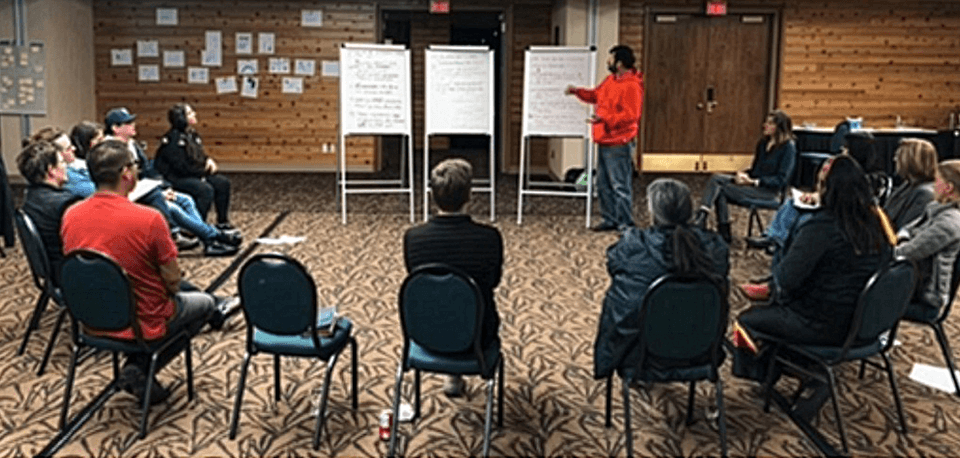
In 2022, SESC members gathered in Banff and engaged in a collective visioning exercise where the following living vision statement emerged:
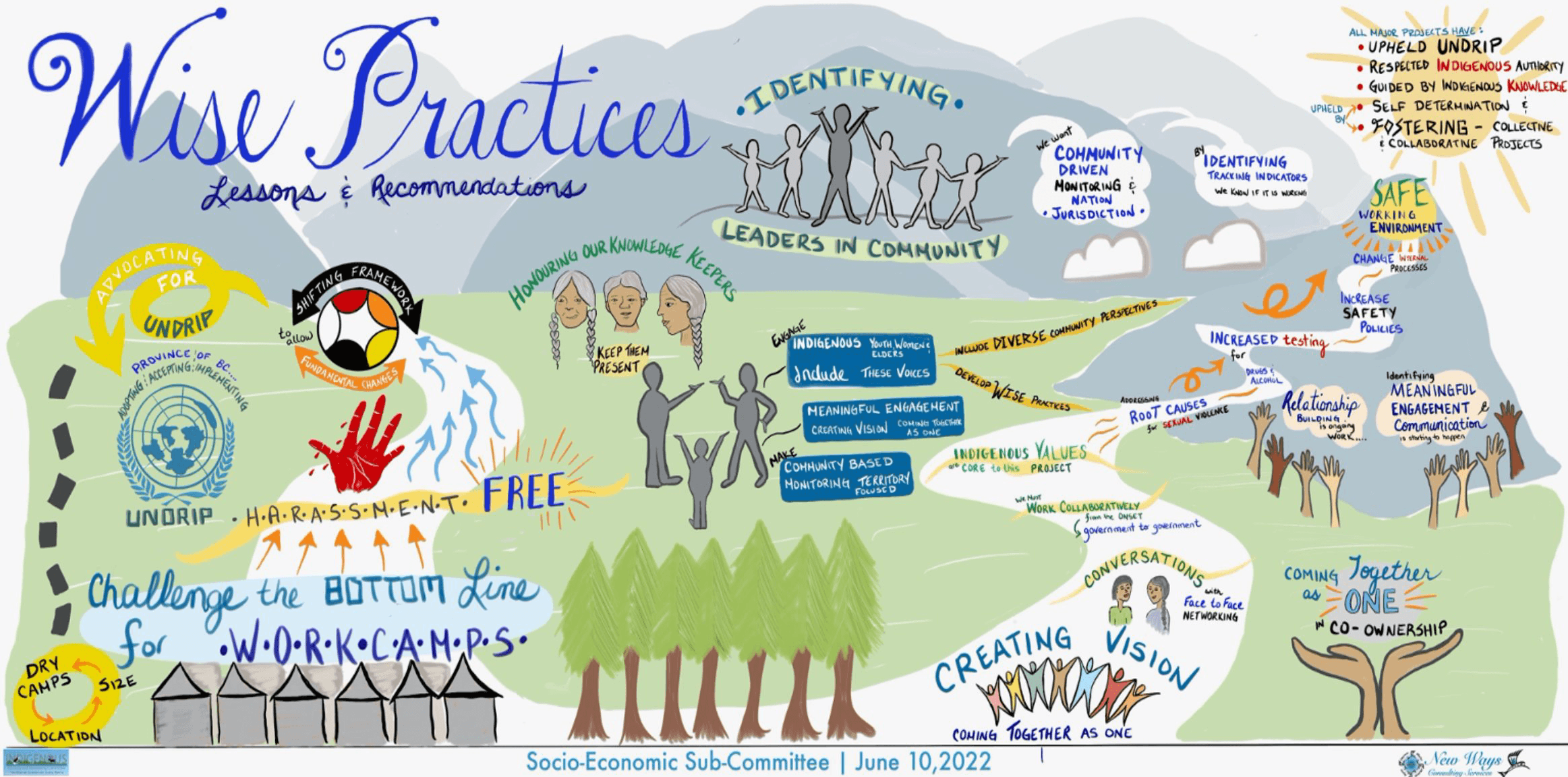
We know we are successful when all major projects have upheld UNDRIP, respect Indigenous authority, and are guided by Indigenous Knowledge and decision-making. Projects approved with Indigenous authority uphold self-determination of Indigenous nations, communities and rights-holders while fostering collective and collaborative relationships.
In our vision, non-Indigenous systems will implement UNDRIP with accountable, consistent staffing, funding, and relationships. Non-Indigenous people, systems, and processes need to challenge Settler-colonialism, implement UNDRIP, and to centre Indigenous perspectives while transitioning and balancing power dynamics.
When these conditions are met, then major projects are designed, led, and managed in a manner that supports strong, healthy communities, and build on community strengths, with actions such as revenue sharing agreements, ongoing strength and relationship building, training and collective addressing of harm experienced by Indigenous communities.
What Are Socioeconomic Effects and Monitoring?

Animated video - The SESC developed an animated video designed to increase awareness of the socioeconomic risks associated with major reource development and the importance of Indigenous community-based monitoring.
What are Socioeconomic Effects?
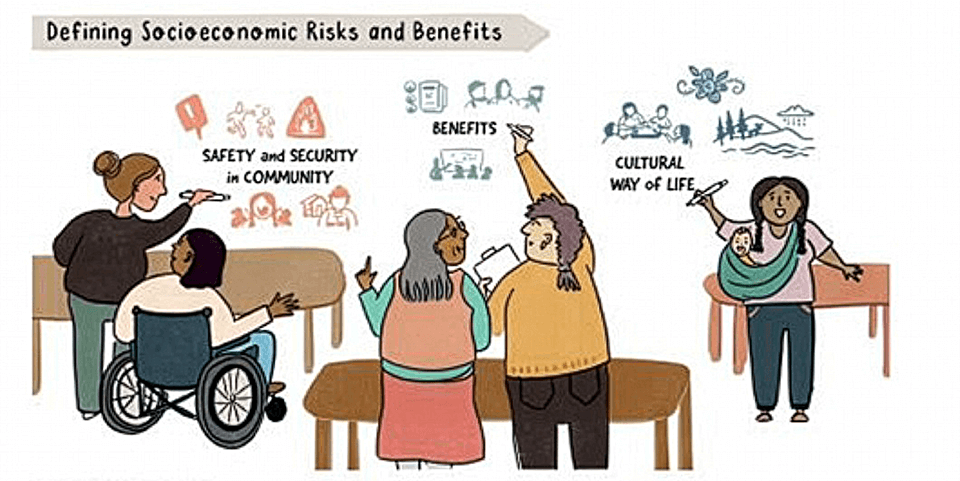
Major projects can influence a wide range of cultural, social, health and wellbeing, and economic factors. Socioeconomic effects are the intended or unintended consequences, positive or negative, short or long term, of a project on people and communities. These effects may be direct or indirect and can influence individuals, community dynamics, and broader societal structures.
What is Socioeconomic Monitoring?
Socioeconomic monitoring is the practice of collecting data to analyse the size of the impact, understanding how it changes over time, and defining when corrective action is needed.
While industry has been monitoring environmental, and health and safety impacts for a long time, applying similar practices to socioeconomic effects is still relatively new.
Working with Indigenous Nations/Communities
A key focus of the SESC is building the capacity of Indigenous Nations/Communities to participate directly in socioeconomic monitoring. This strengthens their role in preventing or mitigating adverse project impacts in their territory and enhancing benefits for their members.
Regional/Community-based Initiatives
The SESC co-developed three regional/community-based socioeconomic initiatives involving Alberta First Nations & Métis, Fraser Valley First Nations & Métis, and Simpcw First Nation (North Thompson). These regional/community-based initiatives bring together representatives from Indigenous communities, federal regulators, social service and health agencies, Royal Canadian Mounted Police, and in some instances, Trans Mountain Corporation (TMC) and its contractors.
“Our primary concern is keeping the people of the valley safe and keeping our relationships intact. The project will come and go but we are here to stay.”
George Lampreau, Simpcw First Nation
Training and Learning Opportunities
The SESC also supports communities through learning opportunities such as:
- Training in Indigenous Gender-Based Analysis Plus
- Overview of the Impact Assessment Act
- Mobilizing Communities to Disrupt Sexual Exploitation and Sex Trafficking in Canada
In partnership with Trans Mountain Corporation, the SECS co-funded approximately XX Indigenous women from affected Indigenous Nations/Communities to complete a Project Management Program at Mount Royal University.
Funded Community-led Projects
The SESC also funded several community-led projects through the IAMC-TMX capacity funding initiatives, including projects focused on:
- Youth skills development
- Land-based learning and healing
- Referral management
- Post-construction economic development planning
Tracking Indigenous-Priority Indicators Related to the TMEP
”Socio-economic indicators provide information regarding the impacts of construction in communities. They are measurements and metrics that address construction-related topics such as the use of local healthcare resources, the number of workers in the community and the type of accommodation being used.”
Tracy Friedel SESC Chair
Increasing Indigenous Participation in oversight of TMEP Socioeconomic Effects Monitoring Plan
The SESC worked with TMC to co-develop Indigenous-focused socioeconomic indicators. The shared objectives were to:
- ensure the socioeconomic monitoring framework gives TMC, the SESC, and Indigenous Nations/Communities meaningful information regarding potential adverse effects for Indigenous peoples, to
- Ensure that key mitigations are in place, and to
- Share timely and meaningful information regarding broader socio-economic aspects of the project
During the Construction Phase, the SESC and TMC met monthly to discuss this information. These meetings allowed the SESC to track trends and ask questions, provided an opportunity for increased Indigenous participation in the oversight of the Project.
Work Camps and the Influx of Temporary Workers
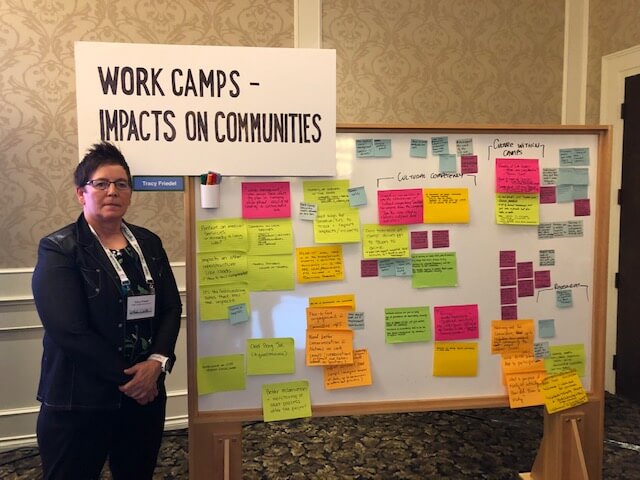
In 2019, the IAMC-TMX Socio-Economic Subcommittee (SESC) identified impacts of temporary work camps and large influxes of workers as a key concern. While these camps can generate economic benefits through joint ventures, contracts, and employment, they are also linked to increased risks, such as, drug and alcohol use, and trafficking, demand on social and health services, higher incidences of gender-based/sexualized violence, and heightened concern for cultural heritage sites and traditional practices.
The SESCs Temporary Work Camps and Influx of Workers Initiative was broken down into four areas of work:
1.
Conducting research and analysis of TMC policies and regulations
2.
Conducting research and analysis of TMC policies and regulations
3.
Conducting research and analysis of TMC policies and regulations
4.
Conducting research and analysis of TMC policies and regulations
As part of this work, the SESC commissioned an evaluation of TMC’s work camp policies and regulations. The analysis encompassed an understanding of UNDRIP, the TRC’s Calls to Action, the MMIWG Calls for Justice, and global leading practices as they relate to temporary influx of workers and work camps. The analysis was also informed by a sample of Indigenous community priorities and concerns. The evaluation found that TMC’s worker accommodation policies met basic standards and included recommendations to strengthen approaches designed to mitigate potential impacts.
The resulting report and recommendations underpin all the SESC’s work and activities. The SESC continues to conduct research on key issues associated with temporary work camps and influx of workers.
Advice to Regulators and Governments - National & International
The Work of the SESC is Connected to Several Federal Initiatives:
- 2019 National Inquiry into Missing and Murdered Indigenous Women and Girls
- 2021 National Action Plan to address Missing and Murdered Indigenous Women and Girls and 2SLGBTQQIA+ (MMIWG2S+) People
- 2021 United Nations Declaration on the Rights of Indigenous Peoples (UNDA)
- 2022 National Action Plan to address Gender-Based Violence (GVB)
- 2023 UNDRIP Action Plan
The SESC prioritizes documenting lessons learned and wise practices identified by Indigenous Nations/Communities based on their experience with the TMEP. These learnings are shared with regulators.
Key Contributions Have Included:
- The SESC submitted a brief to the Standing Committee on the Status of Women as an aspect of their study on Resource Development and Violence Against Indigenous Women and Girls
- The SESC contributed to the CER’s review of the Onshore Pipeline Regulation and Filing Manual, highlighting the need to require an Indigenous Gender Based Analysis Plus lens
- The SESC also supported Natural Resources Canada in successfully advocating for Action Plan Measures (APM 12) which focuses on increasing the safety and security of Indigenous women, girls, and 2SLGBTQQI+people and ensuring equitably benefit from resource development
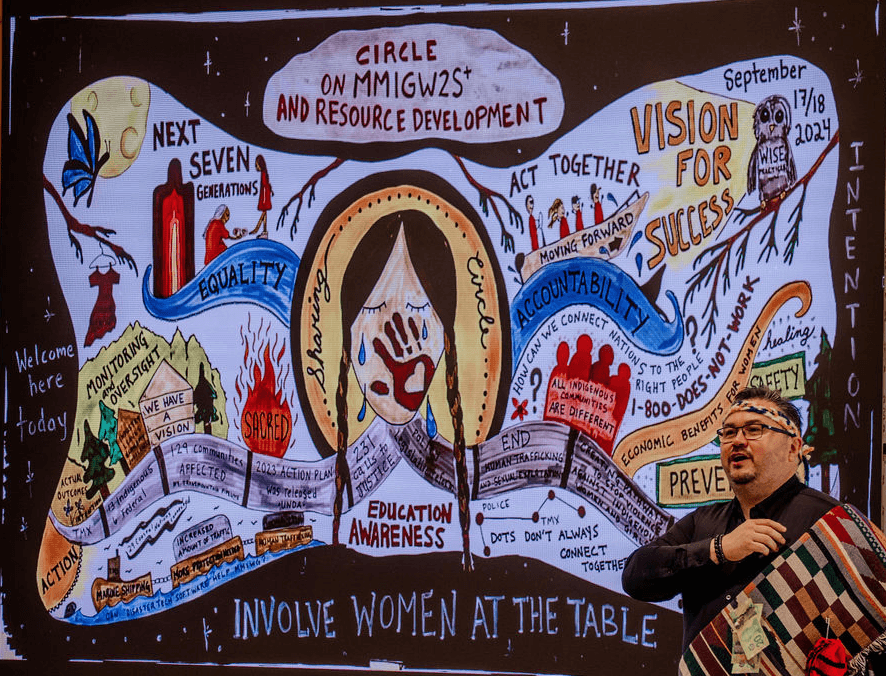
Circle on MMIWG2S+ and Resource Development
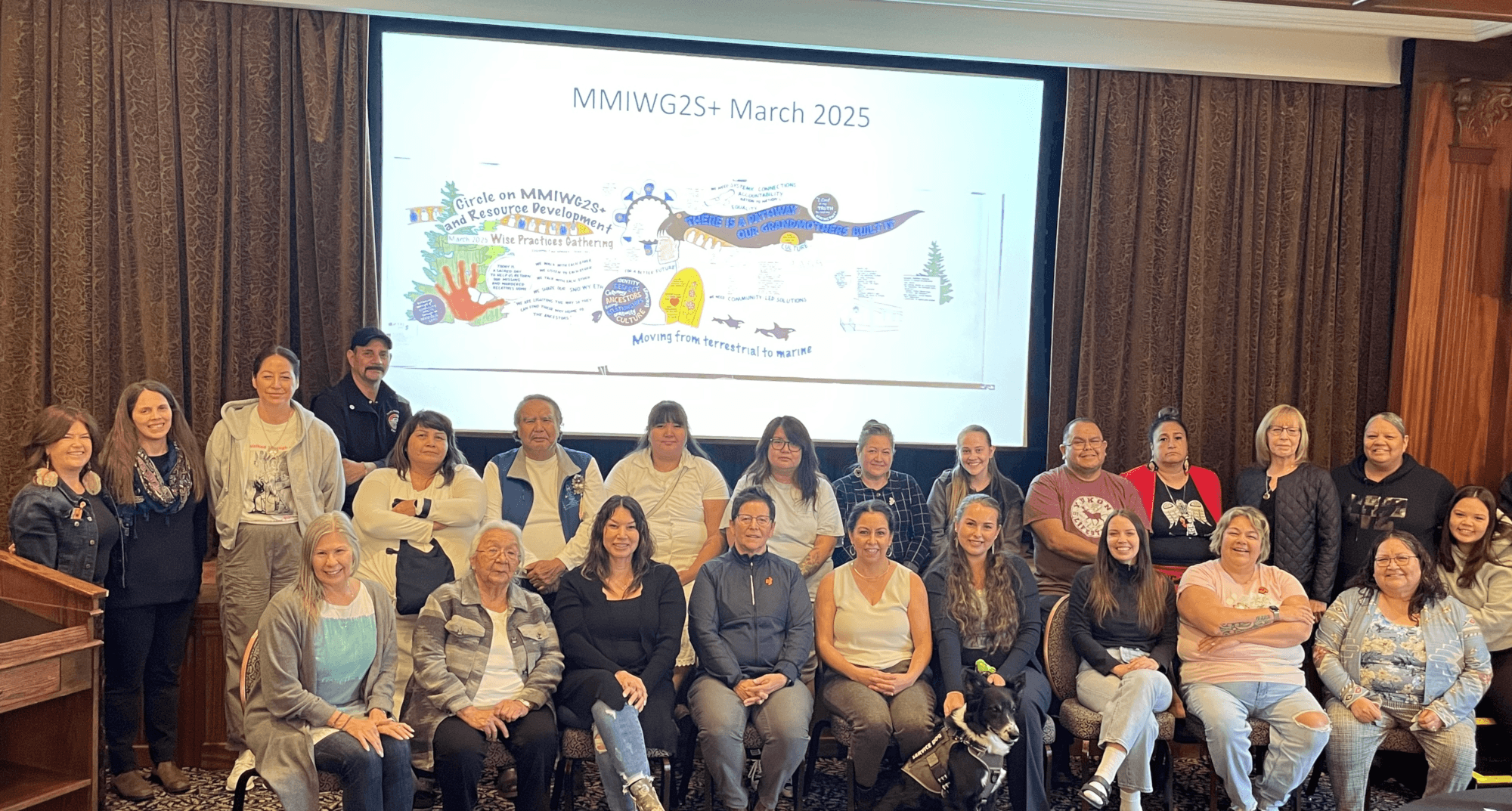
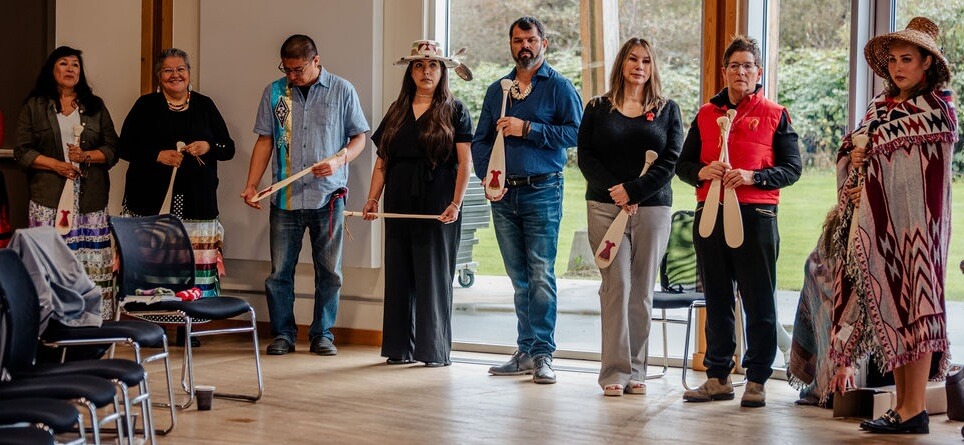
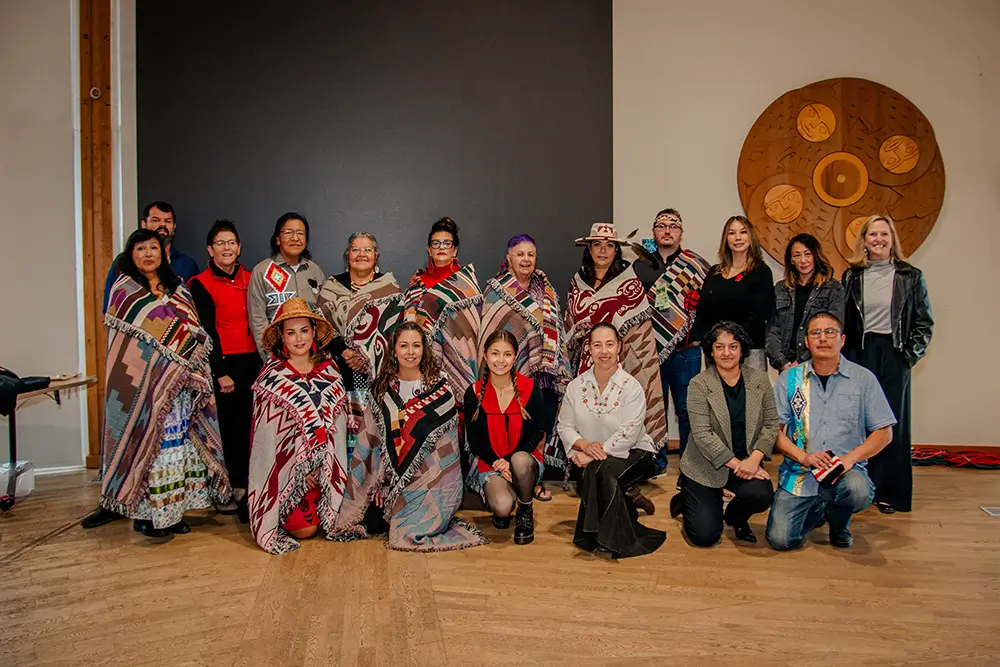
In Fall 2024, the SESC collaborated with the Marine Shipping Subcommittee (MSSC) to establish the Circle on Missing and Murdered Indigenous Women, Girls and 2SLGBTQI+ (MMIWG2S+) and Resource Development. This Indigenous women-led initiative emerged from the SESC work started in 2018 related to the TMEP.
Concerns about temporary work camps and worker influxes became one of three top priorities for the IAMC-TMX in early 2019. Since then, the SESC has been piloting new approaches to monitoring, preventing, and mitigating the potential negative effects of temporary work camps and influxes of workers. While temporary work camps and influx of workers can contribute to building economic capacity in Indigenous Nations/Communities through joint ventures, sub-contracts, jobs, and others, they also pose substantial risks to the safety and security of Indigenous peoples, especially Indigenous women, girls, and gender diverse individuals.
Since the release of the Missing and Murdered Indigenous Women, Girls and 2SLGBTQI+ (MMIWG2S+) Final Inquiry Report in 2019, the SESC has been the only initiative responding to all five National Inquiry Report Calls for Justice related to the resource sector (13.1-13.5). The Circle was created to further this work with a broader focus on all major projects and the concerns of safety and security for Indigenous women, girls, and gender diverse individuals resulting from an increase in marine shipping.
The Circle brings together the voices, experiences and knowledge of Indigenous women and leaders. Its goal is deepen understanding of the connection between resource development and ongoing gender- and race-based violence, and to advance regulatory and policy changes that will ensure the safety and security of Indigenous women, girls and 2SLGBTQI+ people.
SESC Resources
- SESC Research
- North Thomspon Valley socioeconomic Effects Case Study: Improving socioeconomic outcomes of major projects – lessons learned from the Trans Mountain Expansion Project with a focus on North Thompson Valley – Coming Soon
- SESC Issues Briefs – Coming soon
- SESC Factsheet
- SESC Animated Video – Socioeconomic Monitoring for Indigenous Communities
- SESC submission to the Standing Committee on the Status of Women (FEWO) as an aspect of their study on Resource Development and Violence Against Indigenous Women and Girls
- SESC submission to the CER regarding the draft Industry Best Practices for Involvement of Indigenous Nations and Communities in Emergency Management
- SESC’s programmatic work highlighted under the Federal Progress on the Calls for Justice 13.1-13.5
- SESC Wise Practices Reports
- Alberta and Fraser Valley Working Group Terms of Reference